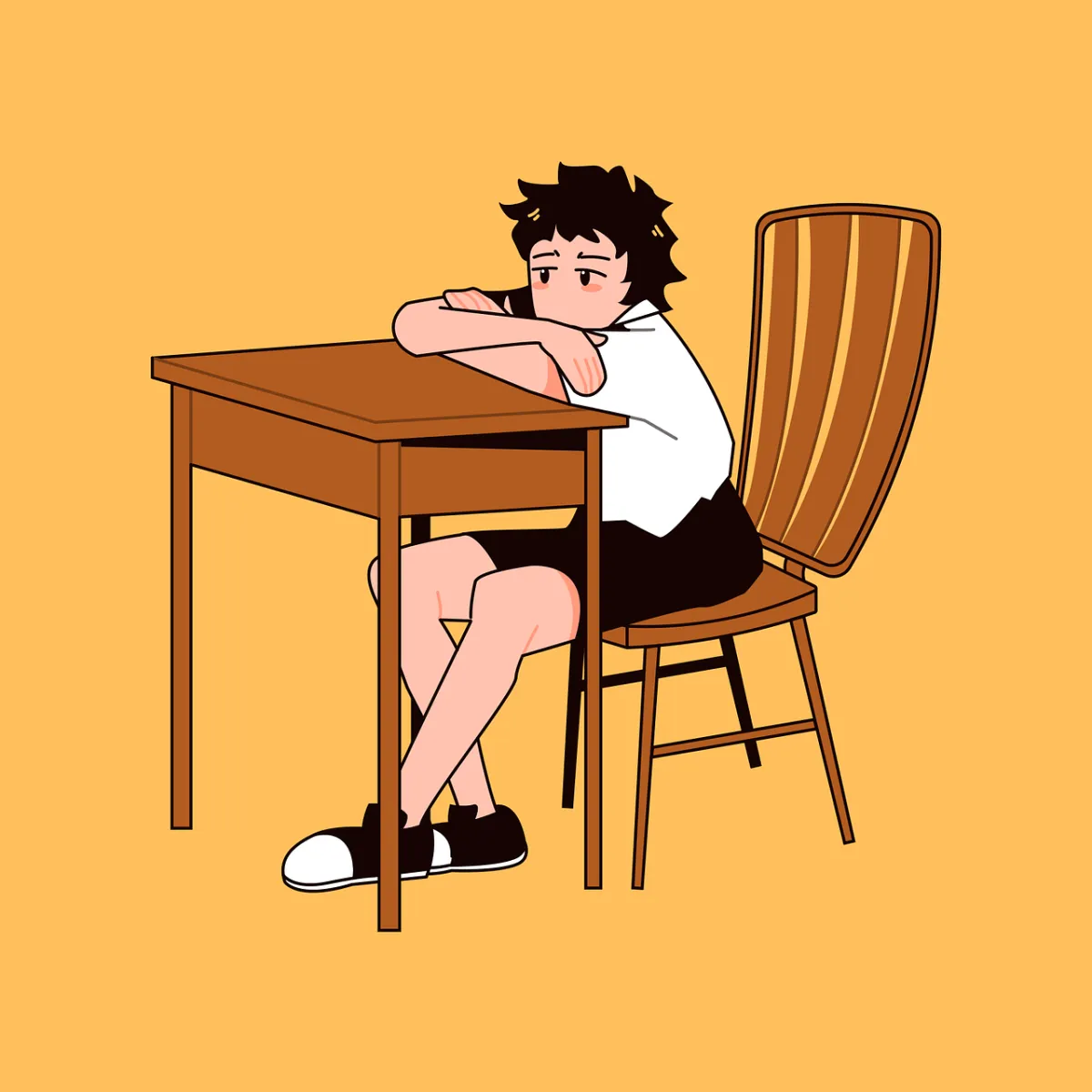
They aren’t giving you a hard time. They’re having a hard time.
What if the “difficult” students aren’t the problem? What if they’re just showing us what dysregulation looks like?
Does your child get labeled “difficult”? Take a deep breath (or maybe two) and consider this: what if your child isn’t the problem?
What if the meltdowns, the shutdowns, the big reactions, and the refusals aren’t your child being defiant at all? What if it’s dysregulation? And what if dysregulation is simply a skill that hasn’t been taught yet?
When Big Feelings Take Over: Let’s talk about what dysregulation is.
Emotional regulation is not an intuitive thing that any of us are born knowing. It's a skill. Just like reading. Just like math.
Some of us develop the skill naturally through experiences, watching and modeling others, and practicing without knowing we are learning something. Some children need more support to learn it. And that’s OK! It’s not a “bad” parenting issue. Spoiler alert: you’ll hear that from some sources.
When a child is dysregulated, their nervous system is overwhelmed. Their brain goes into survival mode. Technically speaking, the brain goes into primitive mode; the thinking brain turns off, and the amygdala takes over.
In simple terms, it’s like working on your computer and having 50 tabs open at one time. It’s overwhelming. It takes a lot of processing, Basically, it’s way too much. Another way to see it is this: your child's brain is "seeing a tiger", getting into fight, flight, or freeze mode and reacting in a survival mode type of way.
Shutting down and refusing to work; yelling, throwing, or acting out; crying over what to us seems “small”; withdrawing from friends; saying “I don’t care” when they clearly do. These are just a few examples of the behaviors that you may see in a child who is dysregulated.
I speak from experience when I say that it’s emotionally exhausting for a parent to see their child hurting, feeling no control, and feeling unable to help.
The truth is your beautiful kiddo is not trying to give you a hard time. They are having a hard time. And they don’t know what to do about it. They feel out of control and scared.
Often times, like my daughter, they are not able to put into words what they are feeling or why. This is one of the most frustrating things for me as her mom!
It brings feelings of “mom” guilt, feelings of being defeated, and feeling overwhelmed. Truth be told we often trigger each other. (But that’s another post for another day.)
The Label Hurts More Than It Helps
When a child is called “difficult,” “defiant,” or “trouble,” they start to believe that’s who they are. It becomes their internal script of themselves. And when a child believes they are the problem, they stop believing they can improve. They will eventually accept that “it’s just who and how they are” which is a total falsehood.
When we shift the question from “what’s wrong with this child?” to “what is overwhelming this child?” everything changes.
We move from punishment to support. From frustration to curiosity. From shame to skill-building. We start to look at the environment from a detective point of view to find out what is going on that is causing this reaction from my child.
What Support Can Look Like
Helping your child in these moments can be as simple as being there, with a hug and understanding, without judgment, with empathy and compassion.
Children need help naming their feelings, especially our twice exceptional kiddos that have HUGE feelings, compared to their peers.
Children need to be taught safe ways to calm their bodies. Some children turn to self-injurious behaviors (SIB) as a way to regulate themselves. This can show up as headbanging, scratching or cutting themselves, pulling their hair out, and others.
Predictable routines are extremely necessary for all kids (and adults by the way), but especially for our dysregulated kiddos. Remember that transitions and disruptions in their routines often trigger behaviors.
Clear expectations are crucial. I have been and still can be guilty in this area. Being a parent often means we’re running in 10 different directions. We tend to get flustered and start “barking out” tasks like an auctioneer. This can throw our child into a spin very quickly. As often as possible, we should be setting clear expectations as far in advance as we can.
They need adults who stay steady, calm, and controlled when they aren’t able. Like I mentioned before, this is probably the toughest for me because I feel awful when I can’t make my child feel better and “fix it”. I can get dysregulated easily if I don’t stay mindful of my own emotions and self-care. I'll address our own self-care in another post.
Frequently, these children also need formal support at school. Here’s what many parents don’t realize. Emotional regulation goals can be written into an IEP. Coping strategies can be taught. Support can be structured. Your child does not have to “just grow out of it.” (Sadly, this has been said over and over again.)
A Different Way to See Your Child
When your child is having a hard time and showing some of the behaviors mentioned, imagine looking at your child in that moment and telling yourself, “This is a skill gap, not a character flaw.” This shift alone will change how you respond. And just as importantly, how your child feels about themselves.
Behind every outburst is a nervous system asking for help. Behind every shutdown is a child who feels overwhelmed. And behind every “difficult” student is a child who wants to succeed even if they don’t yet know how.
If your child is struggling at school and you’re wondering whether they need an IEP, or whether emotional regulation skills can be added to the one they already have, I’m here to help.
You don’t have to figure this out on your own. Reach out. I’d love to support you. My services.
And if this resonates, please share it with another parent who may need to hear this today. It's easy to feel isolated and like we are the only ones having these challenging moments.
But we are not alone!
