Why is it so hard to switch gears? Understanding cognitive flexibility
"We're leaving in five minutes."
"Okay."
Five minutes later, your child is still playing.
You remind them again.
"Time to go."
"I know!"
Now they're frustrated.
You're frustrated.
And now somehow getting out the door has become a whole "situation".
Maybe you've seen the same thing at homework time.
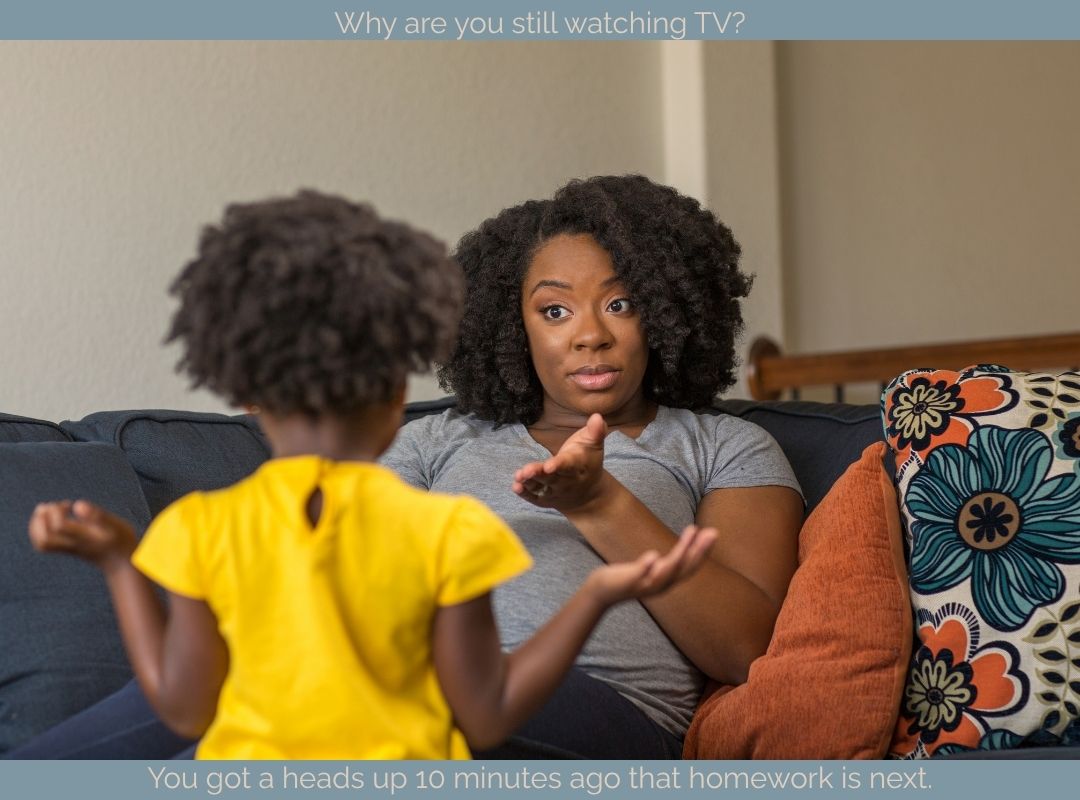
Your child is playing, watching a show, talking with a sibling, or finishing a project. You say it's time to start homework.
They don't move.
You ask again.
Still nothing.
From the outside, it can look like they're ignoring you or refusing to cooperate.
Before we settle on that explanation, let's consider another possibility.
Your child may be having difficulty switching gears.
What does "switching gears" mean?
Switching gears is the everyday way we can describe cognitive flexibility, an executive functioning (how to get things done) skill that helps us adjust when the situation changes.
We use it when we:
* Stop one activity and begin another.
* Change plans when something doesn't go as expected.
* Try a different approach when the first one doesn't work.
* Move from one set of rules to another.
* Consider another person's point of view.
* Shift our attention from one demand to another.
Harvard's Center on the Developing Child describes cognitive flexibility as the ability to switch gears and adjust to changing demands, priorities, or perspectives.
These skills develop over time and become more complex as children grow.
For adults, many of these shifts happen without much thought. Or more likely, we've developed coping strategies over our lifetime to help us with any challenges.
For children, these shifts can take considerably more effort.
"But I gave them a warning!"
You gave a five-minute warning.
Then a two-minute warning.
Then you said, "Time to go."
Your child still seems completely absorbed in what they were doing.
This can be incredibly frustrating.
You may think:
"I gave you plenty of warning."
And, in all fairness, you did.
But knowing that a transition is coming doesn't necessarily make the transition any easier.
A child may understand that it's time to stop playing and start homework.
The challenge may be moving their brain from what they were doing to what they need to do next.
What switching difficulties can look like
You might notice your child:
* Has a hard time stopping a preferred activity.
* Becomes upset when plans change.
* Needs repeated reminders to move to the next activity.
* Gets stuck when something doesn't go according to plan.
* Has difficulty changing strategies when the first one isn't working.
* Becomes frustrated when asked to stop one task and begin another.
* Struggles with unexpected changes to routines.
From the outside, these behaviors can look like stubbornness and downright refusal.
However, there may be more going on beneath the surface.
Your child may be deeply engaged in the current activity and having trouble shifting attention and expectations.
Why transitions can be especially hard after school
Think about the number of transitions your child makes during a school day.
Class to class.
Reading to math.
Lunch to recess.
Recess back to class.
School to home.
Then, once they get home, there may be another series of demands:
Get a snack.
Put your backpack away.
Start homework.
Eat dinner.
Take a shower.
Get ready for bed.
That's a lot of switching.
And sometimes the hardest transition of the day is the one that looks the simplest.
Stop what you're doing and come to the table. And then comes the explosion.
What can help?
Give your child a clear endpoint.
Instead of: "Stop playing."
Try: "You have five more minutes. Finish this level, then we'll turn it off."
The goal is to make the ending easier to anticipate.
Use consistent transition cues
A predictable phrase, timer, visual schedule, or other cue can help signal that one activity is ending and another is coming.
The specific cue matters less than using it consistently. The key is what cue works best for your kiddo.
Tell them what's next
"Do homework next" can feel very different from "We're going to the kitchen, getting your math folder, and doing the first three problems."
The more clearly your child can picture the next activity, the easier the transition may feel. This is why visual schedules often work so well.
Build in a bridge
Sometimes children need a small step between activities.
If your child has been playing outside, coming straight to the homework table may be a difficult shift.
Try: Outside → water → bathroom → homework
That short routine gives the brain a predictable path from one activity to the next.
Practice flexibility when the stakes are low
Not every lesson about flexibility needs to happen during a meltdown. And truly it is not recommended to even address the lack of flexibility at that time. The cognitive/critical thinking/higher level functioning brain has turned off. The kiddo is pretty much running with a primitive "lizard" brain.
And the lizard cares nothing about "how to transition better" skills during a meltdown.
Games can give children opportunities to practice changing rules, trying a new strategy, or handling an unexpected outcome. Harvard's Center on the Developing Child includes games and play among activities that can give children opportunities to practice executive functioning skills.
You might play a familiar game and occasionally introduce a small change.
"What if we tried it this way?"
"What could we do differently?"
The goal isn't to catch your child being inflexible.
It's to give them safe opportunities to practice being flexible.
What about when plans change?
This can be one of the hardest parts.
You planned to go to the park.
Then it rains.
You expected to finish homework before dinner.
Then a sibling needs help.
You told your child they could watch a show.
Then something comes up.
Adults can usually adjust because we've had years of practice dealing with changing plans.
Children may need more support.
Instead of immediately saying "It's not a big deal."
Try: "I know that isn't what you expected."
Then: "The plan changed. Let's figure out what we can do now."
You're acknowledging the disappointment while helping your child practice moving forward.
Flexibility doesn't mean giving in
This is an important distinction.
Supporting cognitive flexibility doesn't mean changing the plan every time your child gets upset.
Sometimes the answer is still no. In my house, the answer usually stays at no.
Because homework still needs to happen.
Because it's still time to leave.
The support comes from helping your child move through the change, rather than expecting them to handle every transition independently before they've developed that skill.
Behind the Behavior
When your child refuses to stop playing, it's easy to see the behavior as defiance.
Sometimes it just may actually be defiance.
There may also be a child who is having a hard time shifting from something engaging to something less appealing.
Let's be honest. When's the last time you jumped up from bingeing your favorite show and ran to the kitchen to do dishes 'cuz that's just so much darn fun? My answer - - never. And if you can do it, please shoot me an email telling me how. LOL
When we recognize that switching gears is a skill, we can start looking for ways to make transitions more predictable and manageable.
The goal isn't to make every transition easy.
It's to help children practice moving from "I don't want to stop" to "Okay, what's next?"
That shift takes practice. And sometimes, it takes more support than we expect.
Every behavior tells a story. When we understand the skill behind the struggle, we can respond with empathy, confidence, and purpose.
Reflection for this week
This week, pay attention to your child's transitions.
When do they switch gears easily?
When does it become difficult?
Is the activity they're leaving highly preferred?
Is the next activity difficult, boring, or unexpected?
Does your child know what is coming next?
You don't have to change every transition.
Just notice the patterns.
Then ask yourself:
Am I seeing a child who is refusing to switch gears, or a child who may need more support making the shift?
